

Food waste is a silent environmental and social challenge. Opportunities for reducing so called ‘food waste’ occur throughout the supply chain—from production and distribution through to our homes and workplaces. While ultimately, 80% of the environmental impacts of products and services are determined pre-retail, Food Innovation Australia Limited (FIAL) findings published in ‘A Roadmap for reducing Australia’s food waste by half by 2030’, highlight that changing behaviours in Australian homes and businesses can deliver significant waste savings (circa 25-40% from experience in other countries). And where waste is unavoidable, recovered and transformed through organics recycling to produce compost, food waste becomes a valuable resource, used to produce new products and materials as part of the circular economy.
Why reducing food waste matters in commercial environments
In workplaces, food waste isn’t just an environmental concern - it’s a financial and compliance issue. Wasted catering, unused fridge items, and over-ordering add to landfill costs, increase Scope 3 emissions and negatively affect your building’s NABERS Waste rating - if your organisation is measuring either.
The NSW Environment Protection Authority reports that the typical commercial office waste bin contains 76% paper and cardboard, 12% food waste, and 6% glass and plastic, all of which can be recycled. That means, almost all the materials commonly found in office or workplace bins could be diverted from landfill with the right systems in place.
Australia’s National Waste Report highlights the potential for greater recovery.
Food waste remains one of the least recovered material streams despite being the most visible and according to the Better Buildings Partnership, better waste management delivers a 10% cost savings.

To understand the environmental impact, this NABERS case study highlights that the average 4.5-star NABERS Waste building manages around five waste streams. This increases to eleven for a 6-star property clearly demonstrating how waste separation and tenant/employee engagement directly correlates with higher performance.
Why address food waste?
Nationally, the approach to organics collections is disjointed and inconsistent with access and standards varying between States, Territories and even across councils. This lack of uniformity and insufficient public engagement campaigns has created a situation where food waste recovery is not considered and the public are confused about the role of this additional bin.
For building management teams and those managing commercial spaces that understand and communicate the value of reducing and recycling, change is possible. Investing in engagement programmes, in particular those addressing behaviour change, can support these buildings realise significant benefits across cost, compliance, and culture.
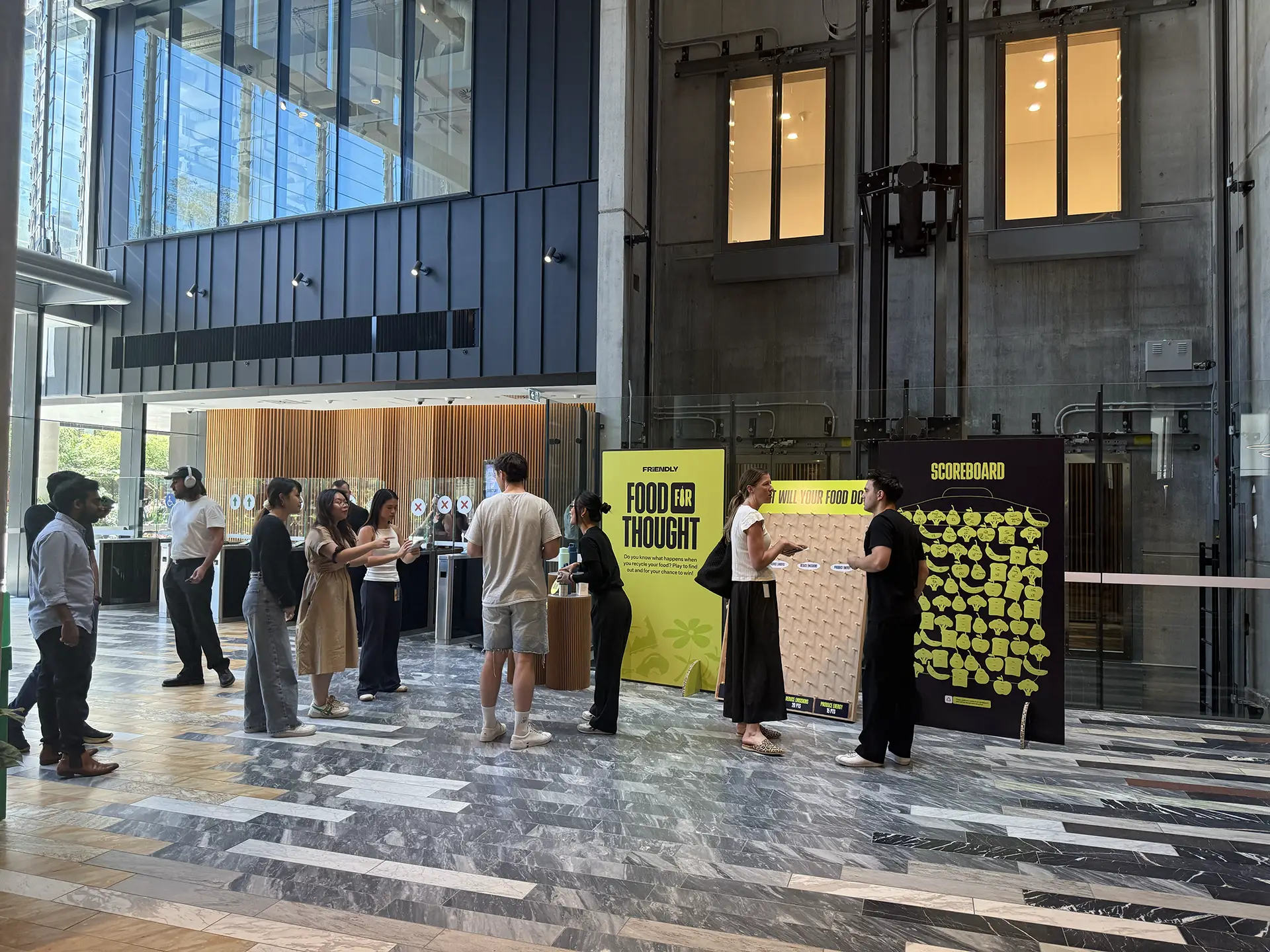
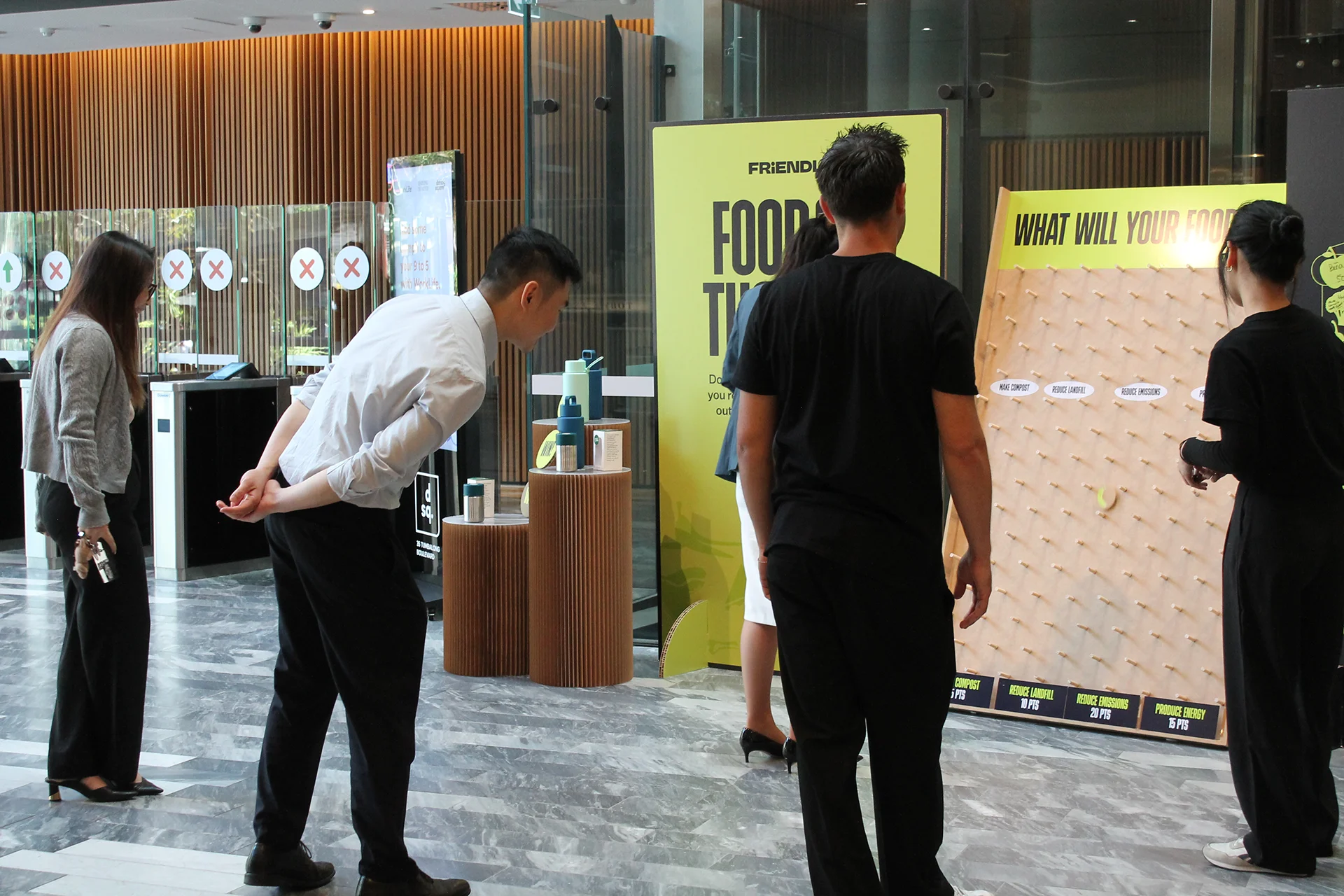
How reducing food waste improves your NABERS Waste rating
Reducing and separating food waste doesn’t only divert material from landfill, it directly improves performance under NABERS, lowers disposal costs, and strengthens your ESG outcomes.
NABERS (the National Australian Built Environment Rating System) measures how efficiently buildings manage resources, including waste. Food waste has a heavy impact because when sent to landfill, it produces methane, a greenhouse gas with more than 25 times the warming potential of carbon dioxide.
By reducing food waste and diverting organics through composting or collection services, your business can:
- Lower landfill weight, improving your NABERS rating
- Increase resource recovery scores, supporting building compliance
- Demonstrate measurable progress towards waste and carbon reduction goals
Improving your NABERS Waste rating is not only good for the planet — it’s now a competitive advantage for tenants, owners, and facility managers seeking to attract ESG-conscious investors and occupants.
.webp)
Food waste and ESG performance
Reducing food waste is a tangible way to strengthen ESG performance, in particular the Environmental and Social pillars while meeting investor expectations, and supporting building-wide compliance.
- Environmental: Cuts methane emissions and Scope 3 waste factors, directly contributing to carbon-reduction targets and improves resource efficiency, for example, using procurement and catering budgets more responsibly
- Social: Engages staff in visible, purpose-driven actions that build culture and sustainability literacy across teams
- Governance: Provides verifiable reporting data, transparency, and alignment with sustainability frameworks. Strong waste reduction initiatives show property management, tenants and investors your commitment to sustainability, helping attract and retain like-minded occupants
Depending on your organisation’s size and reporting obligations, food waste reduction may also support compliance with modern ESG frameworks and NSW FOGO mandate, that will impact businesses and institutions (in stages) from July 2026.
Behaviour change: Turning awareness into action
Reducing food waste at work isn’t only about having the right bins— it’s about people. Even with composting systems or recycling programs in place, long-term results depend on everyday behaviours. Awareness helps, but it doesn’t automatically lead to change.
The Theory of Critical Mass shows that when 50% of people in a community adopt a behaviour consistently, it triggers a wider cultural shift. When enough people in your office compost regularly and reduce waste, others follow, and it becomes the new normal.
Successful programs focus on why change matters and these behaviour changes start small, things like fridge labelling, catering policies, signage, but scales when supported by systems.
- Engage your team: Build awareness through clear, consistent communication and signage in office kitchens. Use posters and QR codes by bins linking to short videos or guides
- Implement organics separation: Introduce food-only bins for collection or composting systems
- Audit and measure: First, identify how much food waste your site generates, then monitor contamination for continual improvement.Share progress through reports or dashboards. Announce monthly food waste diversion stats (“We composted 300kg last month!”)
- Leadership support and visible participation: Organise small rewards, like coffee vouchers to recognising teams that lead by example
- Build consistent momentum: Behaviour change relies on repetition and reinforcement. Use a planned sequence of workshops, activations, communications, feedback loops, and transparent data to build habits gradually and consistently. Remember, behaviour change is a journey not an event.
Reducing food waste is a practical, visible way to demonstrate leadership in sustainability, improving performance and reducing costs, while creating a more engaged workplace culture.
How Friendly can help
Whether you’re aiming to improve your NABERS Waste rating or strengthen your ESG performance, Friendly helps organisations measure, manage, and reduce waste through behavioural programmes, audits, and ongoing reporting support.
If you’re ready to:
- reduce waste costs and emissions,
- engage and support your people to create change, and
- improve your NABERS Waste ratings and compliance,
...then our team can help you design and implement a waste-reduction programme that works for your workplace. Get in touch at hello@friendly.com.au to book a consultation.